For ship owners and fleet managers, maintaining high navigation safety standards depends heavily on crew alertness and comfort. On many vessels, sun glare, heat, and reflections on the bridge directly impact the crew’s ability to work safely and efficiently.
Excessive sunlight causes eye strain, fatigue, headaches, and reduced concentration, all of which can compromise navigation accuracy and operational performance. Installing marine-grade anti-glare blinds is one of the most effective ways to improve working conditions and reduce operational costs at the same time.
This guide explains how the right blinds enhance crew well-being on ships, energy efficiency, and navigation safety on modern ships, and what ship owners should look for when upgrading.
Why Crew Well-being on Ships Matters for Navigation Safety
Bridge officers spend long hours monitoring radar, ECDIS displays, and surrounding traffic. When sunlight floods the wheelhouse, the crew faces:
- Eye strain and headaches
- Reduced visibility through reflective bridge windows
- Difficulty reading electronic navigation displays
- Increased fatigue during long watches
- Higher risk of misjudgment and human error
Creating a more comfortable visual environment improves accuracy and decision-making.
For more on managing glare on the bridge, see: How to Reduce Sun Glare on a Ship’s Bridge to Improve Navigation Safety
How Marine Solar Blinds Keep the Bridge Cooler
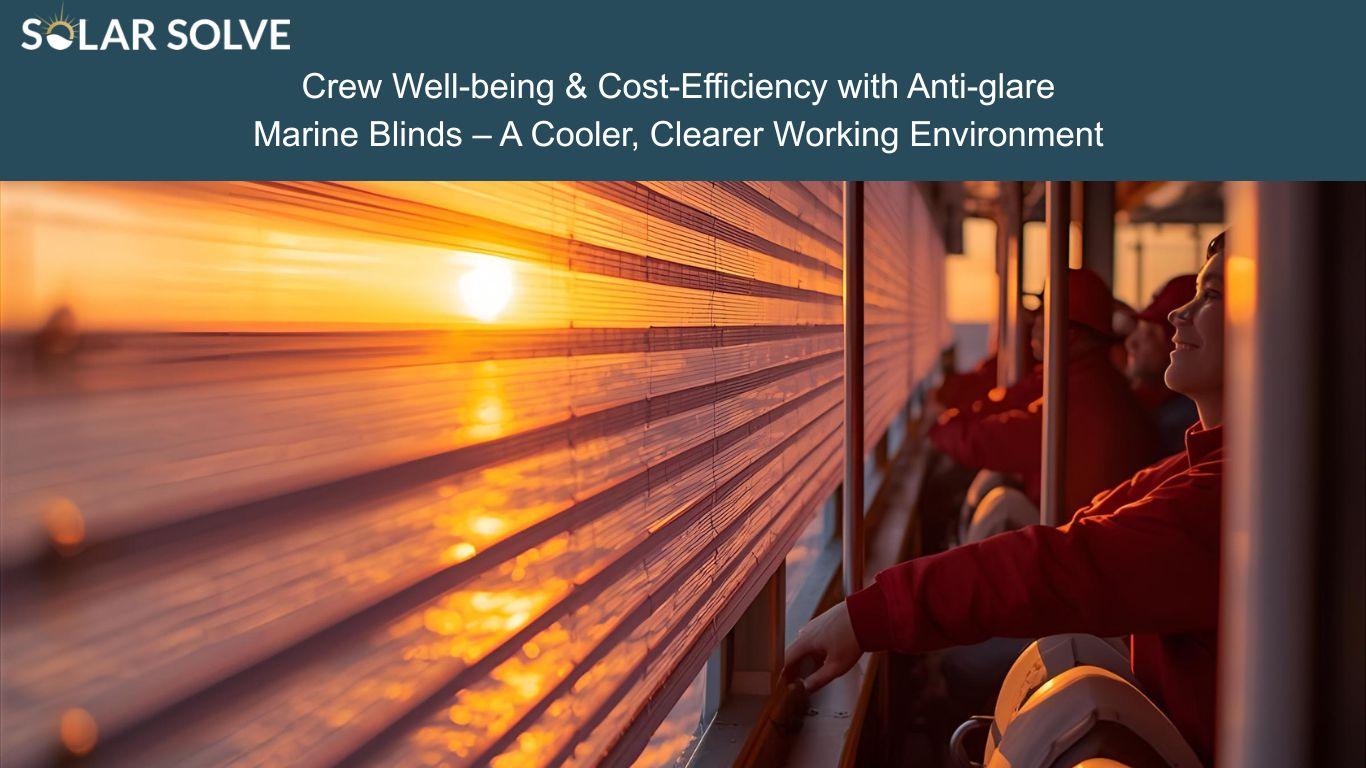
Heat buildup on the bridge is a common complaint, particularly in warm climates or during long voyages. SOLASOLV® solar blinds are engineered specifically for marine environments and provide:
- Significant solar heat reduction, keeping bridge temperatures lower
- UV filtering to protect both crew and electronic equipment
- Glare reduction without blocking visibility
- Improved comfort during long shifts
A cooler bridge reduces reliance on air conditioning systems, helping vessels cut down on fuel consumption and running costs.
Explore solar blind options: Solar Blinds
Improved Visual Comfort = Safer Navigation
Glare is more than a minor inconvenience, it can obscure critical details during navigation. Anti-glare blinds help by:
- Reducing direct sunlight on essential instruments
- Preventing reflective glare on large bridge windows
- Allowing clear forward visibility to monitor hazards
- Supporting safer navigation in high-glare conditions
Cost-Efficiency Through Lower Energy Use and Less Equipment Wear
Ship owners benefit financially from installing heat- and glare-reducing blinds. Key cost-saving advantages include:
- Lower HVAC energy consumption
- Reduced time spent running high-power cooling systems
- Less stress on bridge electronics, extending equipment lifespan
- Lower maintenance costs
- Improved crew performance, reducing operational risks
How to Choose the Right Marine Blinds for Your Vessel
When selecting marine blinds for navigation bridges, ensure they meet the following criteria:
1. SOLAS & IMO Compliance
Ensure blinds are Type Approved by major classification societies and meet required visibility standards.
Explore marine-specific solutions: Marine
2. Advanced Heat & Glare Reduction
Choose blinds that block solar radiation while maintaining forward visibility.
3. Durability for Offshore and Open-Sea Conditions
Marine blinds are exposed to:
- Salty air
- Constant vibration
- Temperature fluctuations
Make sure materials are built for offshore use: Offshore
4. Custom Fit for Bridge Window Types
Most wheelhouse windows are angled, curved, or irregularly shaped.
Consider:
- Cassette roller blinds for protected mechanisms
- Tensioned blinds for slanted or overhead windows
Explore options: Cassette Roller Blinds
Maintaining Marine Blinds for Maximum Efficiency
To keep blinds operating effectively, follow these practices:
- Clean regularly to remove salt, grime, and dust: How to Clean Outdoor Roller Shades
- Check tension systems to ensure smooth operation
- Inspect mounting components periodically
- Follow proper installation guidance: How to Install Outdoor Roller Shades
Proper maintenance ensures optimal glare reduction and extends the lifespan of the blinds.
Benefits at a Glance
Crew Well-being
A cooler, glare-free bridge improves alertness and reduces fatigue.
Operational Efficiency
Fewer navigation errors and clearer visibility during all watch conditions.
Cost Savings
Reduced HVAC use, lower fuel consumption, and extended equipment longevity.
Regulatory Compliance
Meets SOLAS and IMO visibility requirements.
Long-Term Reliability
Marine-grade construction ensures dependable performance in harsh offshore environments.
Conclusion
Creating a cooler, clearer, and more comfortable bridge environment is one of the most effective ways to improve navigation safety, crew well-being, and operational efficiency. Type-Approved, IMO-compliant marine anti-glare blinds, crews benefit from reduced glare, enhanced visibility, and a safer working environment—while ship owners benefit from lower costs and improved performance.
Explore reliable, marine-approved glare solutions:
Solar Blinds | Cassette Roller Blinds | Marine