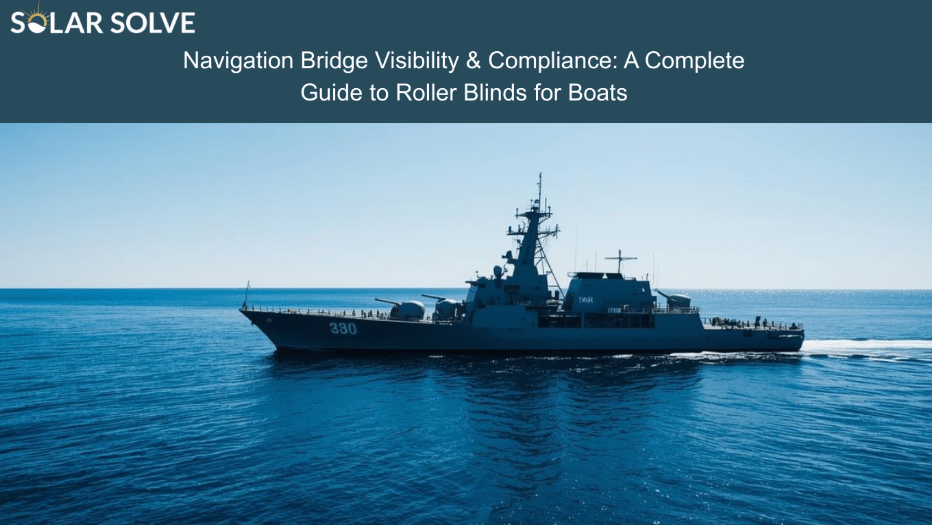
Maintaining clear visibility from a vessel’s navigation bridge is essential for safe maritime operations. Officers rely on unobstructed views and accurate instrument readings to guide ships through varying weather and sea conditions. Excessive sunlight and glare reflecting from the water can interfere with navigation systems and visual awareness. This is why improving bridge visibility & compliance with roller blinds for boats has become an important consideration for modern vessels.
Marine roller blinds designed for navigation bridges help control glare while preserving outward visibility. When installed correctly and supported by certified materials, these systems assist ship operators in meeting maritime safety regulations while maintaining efficient bridge operations.
Why Bridge Visibility Is Critical for Maritime Safety
The navigation bridge serves as the command centre of a vessel. From this location, officers monitor navigation systems, maintain watch, and make critical operational decisions. Poor visibility caused by solar glare can lead to several challenges, including reflections on digital displays, difficulty reading navigation instruments, and eye strain during long shifts.
Improving bridge visibility & compliance with roller blinds for boats ensures that glare is reduced without obstructing the captain and crew’s field of vision. This balance is essential to maintain safe navigation and support operational awareness.
Compliance Requirements for Bridge Window Coverings
Maritime regulations emphasise that bridge windows must allow clear outward visibility at all times. Any shading system installed in this area must reduce glare while avoiding interference with navigation.
To meet these requirements, marine roller blinds used on bridges must:
- Maintain clear visibility for navigation officers
- Use materials designed for marine environments
- Meet recognised safety and fire-retardant standards
- Operate smoothly without blocking equipment or controls
By selecting the correct shading systems, vessel operators can ensure that their installations support bridge visibility & compliance with roller blinds for boats while aligning with maritime safety expectations.
Anti-Glare Roller Blinds for Navigation Bridges
Unlike traditional interior blinds, marine anti-glare roller systems are designed to filter sunlight rather than completely block it. These fabrics reduce brightness and reflections while still allowing external visibility through bridge windows.
One example used in marine navigation areas is SOLASAFE (with cassette). This system is designed to reduce glare on bridge windows while protecting the blind mechanism within a cassette housing, helping it withstand the demanding conditions often experienced at sea.
Another suitable option is SOLAROLA (without cassette), which provides effective glare reduction through a simple and durable roller blind design. These solutions are commonly used in bridge environments where glare control is necessary but full blackout is not appropriate.
Certification and Maritime Standards
Compliance with maritime standards is essential for any equipment installed onboard vessels. Marine roller blinds used on bridges should be supported by recognised certification and technical documentation.
Many marine shading systems are approved by leading classification societies, including DNV, Lloyd’s Register, ABS, and RINA. These approvals confirm that the products meet strict safety and performance requirements for marine use.
By installing certified systems, vessel operators can demonstrate that their shading solutions contribute to bridge visibility & compliance with roller blinds for boats during inspections and regulatory reviews.
Supporting Solar Control with Window Films
In addition to roller blinds, some vessels incorporate complementary solar control solutions. One example is ADHESIVE WINDOW FILM, which can be applied directly to bridge windows to reduce glare and solar heat.
When used alongside anti-glare roller blinds, window films can enhance solar control while maintaining the clear visibility required for safe navigation. This combination helps create a more comfortable environment for bridge officers while supporting operational safety.
Best Practices for Marine Installations
For shipowners, marine contractors, and resellers, selecting the correct shading system is essential. Products installed on navigation bridges must always be designed specifically for marine use rather than general interior applications.
Best practices include:
- Selecting anti-glare roller blinds designed for bridge environments
- Verifying that products meet recognised maritime certifications
- Reviewing technical documentation before installation
- Ensuring materials meet required fire safety standards
Following these guidelines helps maintain bridge visibility & compliance with roller blinds for boats, ensuring safe vessel operation and alignment with maritime regulations.
Conclusion
Maintaining clear bridge visibility is a fundamental requirement for safe navigation. Sunlight and glare can significantly affect a vessel’s operational environment, making effective solar control solutions essential.
By installing specialised anti-glare systems such as SOLASAFE and SOLAROLA, vessel operators can improve navigation visibility while meeting compliance requirements. When combined with additional solutions like adhesive window films, these systems provide reliable solar management that supports both maritime safety and regulatory standards.